

First Steps to Planning a Wedding: 10 Things to Do Right After Getting Engaged
Take a Breath and Enjoy the Moment
Before you open Pinterest, before you google "wedding venues near me," before you text your best friend about bridesmaid dresses — stop. You just got engaged. Give yourself 1–2 weeks to simply enjoy being a fiancé before stepping into the role of wedding planner. The wedding industry will still be there in two weeks. Your photographer, venue, and caterer will all still be available. But these first few days of being newly engaged? You only get them once.
Pro Tip
The only exception: if you want a summer wedding and you're reading this in winter, popular venues can book out 18 months ahead. In that case, start venue research within the first week — but still take a day or two to celebrate first.
Announce Your Engagement (Strategically)
Before it goes on social media, tell the people who matter most in person or by phone. The order in which you announce your engagement matters more than most couples expect. • Tell immediate family first — both sets of parents, then siblings • Tell your closest friends next — before any social media post • Post on social media only after everyone important has heard from you personally • Be thoughtful about timing — avoid announcing during someone else's major life event
Pro Tip
If your parents are divorced or there is family tension, call each parent separately so no one feels like an afterthought. This small gesture prevents big drama later.
Have the Budget Talk (Before Anything Else)
This is the most important first step to planning a wedding that most couples skip or delay — and it's the reason so many engagements start with stress. You cannot plan a wedding without a number. Every other decision flows from it. The budget conversation has three parts: • What can you and your partner contribute from savings? • Are either set of parents contributing? How much, and with what expectations attached? • What is the maximum total budget — the hard ceiling you will not cross?
| Budget Range | What It Gets You | Guest Count |
|---|---|---|
| $5,000–$10,000 | Intimate ceremony, micro-wedding, or elopement with celebration dinner | 10–30 guests |
| $10,000–$20,000 | Small wedding with basic venue, photography, catering | 30–60 guests |
| $20,000–$35,000 | Mid-range full wedding — most common range in the US | 60–120 guests |
| $35,000–$60,000 | Upscale venue, quality vendors across all categories | 100–150 guests |
| $60,000+ | Luxury wedding, premium vendors, large guest list | 150+ guests |
Important
Never agree to accept money from parents or family without discussing what expectations come with it. Financial contributions often come with opinions about the guest list, venue, or ceremony. Clarify this upfront to avoid conflict later.
Align on a Wedding Vision
Before you book anything, you and your partner need to be aligned on the kind of wedding you want. Not the exact details — just the broad strokes. Misaligned expectations are the #1 source of wedding planning conflict between couples. Spend one evening discussing these questions: • Big or small? Under 50 guests, 50–100, or 100+? • Indoor or outdoor? Or a mix of both? • Formal or casual? Black-tie, semi-formal, or relaxed? • Religious or civil ceremony? Or a blend? • Local or destination wedding? • What are your top 2–3 absolute must-haves? Your answers to these questions will narrow your venue search from thousands of options to a manageable shortlist — and will help you allocate your budget to the things that matter most.
Estimate Your Guest Count
Your guest count drives your venue selection, your catering cost, your stationery quantity, and almost every other major decision. You need a rough number before you can tour a single venue. • Start with an unconstrained list — everyone you'd genuinely want there • Divide into tiers: Must Invite, Would Love to Include, If Budget Allows • Consider that your partner's family has a list too — coordinate early • Your venue will have a minimum and maximum capacity — this becomes your constraint
Pro Tip
A good rule of thumb: every 10 additional guests adds roughly $800–$1,500 to your total wedding budget (venue, catering, stationery, favors combined). Use this to make trade-off decisions.
Decide on a General Timeframe
You don't need an exact date yet — but you need a general window. This affects venue availability and your overall planning timeline.
| Engagement Length | Planning Style | Key Consideration |
|---|---|---|
| Under 6 months | Fast-paced — decisions in days, not weeks | Skip save the dates, book immediately |
| 6–9 months | Efficient — one major task per week | Some peak venues may not be available |
| 10–14 months | Comfortable — the sweet spot for most couples | Most options available, no rush |
| 15–18+ months | Relaxed — plenty of time for everything | Book vendors early to secure your picks |
Consider the season you want to get married in. Spring (April–June) and fall (September–October) are the most popular seasons, with higher prices and earlier booking requirements. Winter weddings can save 20–30% on venue costs.
Research and Book Your Venue
Your venue is the most important booking of your wedding — it determines your date, your guest ceiling, your catering options, and the aesthetic of your day. Do not book any other vendor before your venue is confirmed. • Research 8–10 venues online first — narrow to 3–5 to tour in person • Tour venues with a list of questions (capacity, exclusivity, catering policy, noise curfew) • Ask about all-inclusive vs. bring-your-own-vendors policies • Check availability for your preferred dates before falling in love with a venue • Read the full contract before signing — pay attention to cancellation policy • Typical deposit: 25–50% of total venue cost to secure your date
Confirm Your Date and Book the Photographer
Once your venue is booked and your date is set, the very next call should be to photographers. Top wedding photographers in most markets book 12–18 months in advance, especially for peak season dates. Missing out on your dream photographer is one of the most common regrets newly engaged couples have. • Review full wedding galleries — not just highlight reels or Instagram grids • Book a discovery call with 2–3 photographers before making a decision • Ask about their backup plan if they have an emergency on your wedding day • Confirm they have liability insurance • Typical deposit: $500–$1,500 to secure your date
Build Your Wedding Website
A wedding website is your central hub for all guest communication. Launch it within the first month of your engagement — it's free, fast, and will save you hundreds of repeated text messages and phone calls. Your wedding website should include: • Your names and wedding date (even if venue is TBC) • Your love story — a short, personal description of how you met • Wedding location details (once confirmed) and directions • Accommodation recommendations for out-of-town guests • RSVP form (add this when invitations go out) • Gift registry links • FAQ section (dress code, parking, children policy) Free platforms: Zola, The Knot, Minted, WeddingWire. All allow custom domains (e.g., emilyandJames.com) for a small fee.
Get Organized with a Wedding Planner (Printable or Digital)
You now have the major foundations in place — budget, vision, guest count, venue, and photographer. Now it's time to get truly organized. A wedding planner (printed or digital) becomes your command center for the next 12–18 months of planning. Look for a planner that includes: month-by-month checklists, budget tracking by category, vendor contact directory, guest list and RSVP tracker, seating chart, day-of timeline, and ceremony planner. The more comprehensive, the better.
Wedding Planner
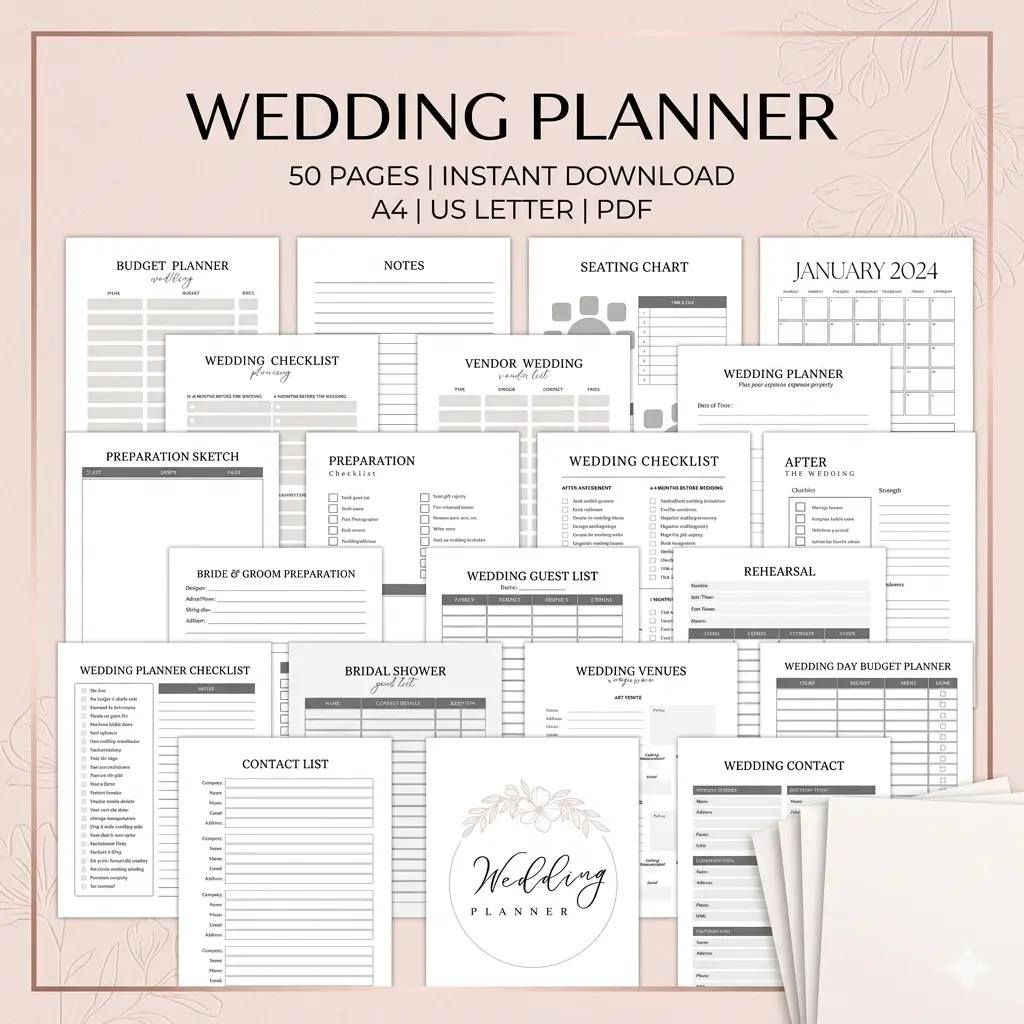
Wedding Planner Printable PDF – 50 Pages | A4 & US Letter | Checklist, Budget, Guest List & Timeline
$7.25

All-In-One Wedding Planning Bundle – 300+ Pages | Canva Templates, Planner, Invitations & More | Instant Download
$21.60
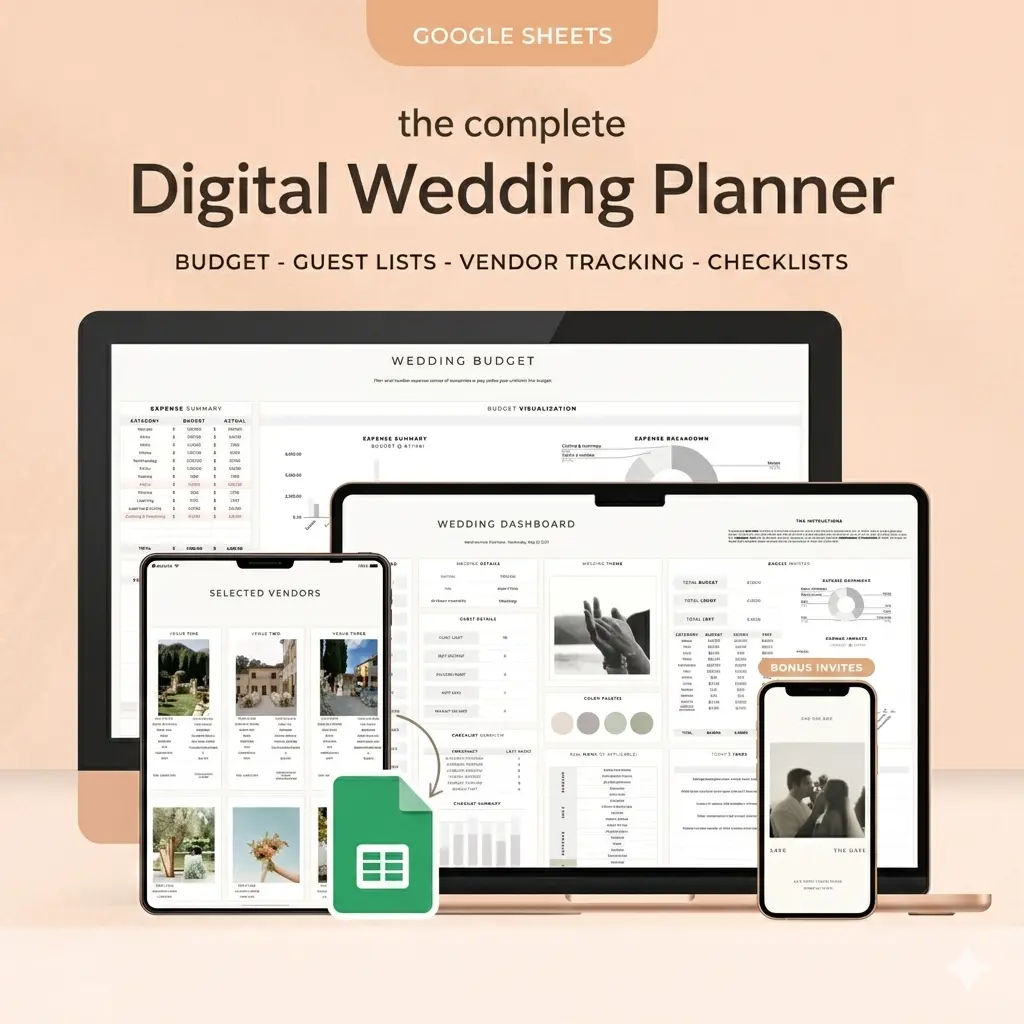
Wedding Planner Spreadsheet – Google Sheets Template | 22 Tabs | Budget, Guest List & Timeline
$14.00
Your First-Week After Getting Engaged — Checklist
• Tell immediate family and close friends in person or by phone • Take engagement photos (even on your phone) while the excitement is fresh • Discuss budget and financial contributions with both families • Talk through your wedding vision with your partner (big vs. small, formal vs. casual) • Make a preliminary guest list — each partner writes their own, then combine • Browse wedding venues online — build a shortlist of 5 to contact • Set up a joint email address for wedding-related communication (e.g., emily.james.wedding@gmail.com) • Download a wedding planning app or printable planner to start tracking tasks • Book a professional engagement photo session • Enjoy being engaged — this time is fleeting and beautiful
Frequently Asked Questions
Q: How long should an engagement be before getting married? A: The average engagement in the US is 14 months. Most wedding planning experts recommend a minimum of 12 months to have full vendor availability and no rushed decisions. Six months is doable but requires fast decision-making. Under six months requires a very small guest list or an elopement to be realistic. Q: Should I hire a wedding planner from the start? A: A full-service wedding planner is worth considering if your budget is $50,000+ or you have extremely limited time. For most couples, a day-of coordinator (hired 1–2 months before the wedding) plus a good planning system (binder, spreadsheet, or app) is sufficient and far more affordable. Q: What's the very first thing to book after getting engaged? A: Your venue — always. The venue determines your date, your guest count ceiling, and which other vendors are even available. Everything else can wait until the venue is confirmed. Q: How do I start planning a wedding with a small budget? A: With a tight budget, your first decision should be guest count — keeping it under 50 dramatically reduces costs. Then prioritize: decide your top 2–3 must-haves and allocate most of your budget there. Consider off-peak dates (winter or Friday/Sunday), which can save 20–30% on venue costs.